About Wisdom Teeth
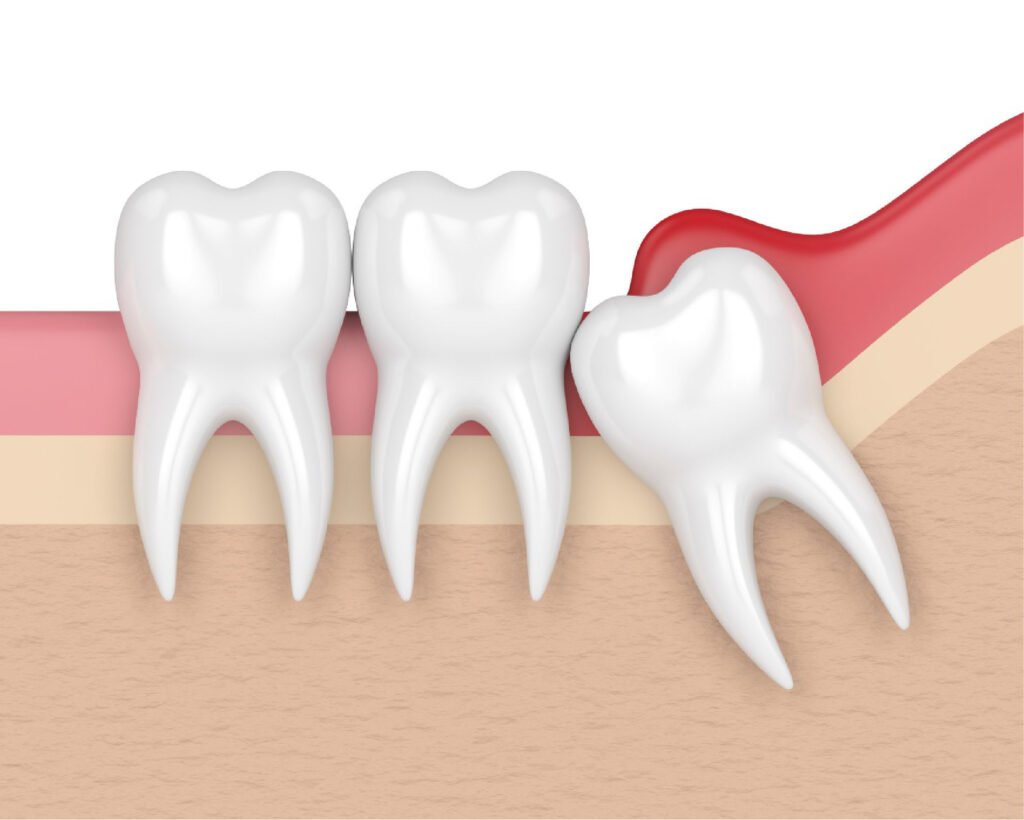
Wisdom teeth are the last molars, usually appearing between 17 and 25 years of age. Often there is not enough space, so they come in at an angle or stay partly under the gum (impacted).
Not every wisdom tooth needs removal – an examination and X-ray show whether it is causing or likely to cause problems.
Who is it for?
- Pain or swelling at the back of the mouth
- Repeated gum infection around a partly erupted tooth
- Decay in the wisdom tooth or the tooth next to it
- Impacted wisdom teeth
Benefits
- Relief from pain and repeated infection
- Protects neighbouring teeth
- Easier cleaning at the back of the mouth
How the treatment works
- 1
Examination & X-ray
To see the position of the tooth and the roots.
- 2
Planning
We explain whether removal is needed and how it will be done.
- 3
Removal
The tooth is removed under local anaesthesia.
- 4
Healing advice
Clear instructions for a smooth recovery.
Care tips
- Bite on the gauze for the time advised
- Avoid spitting, using a straw or smoking for the first day
- Eat soft, cool foods initially
- Take medicines as prescribed and contact us if pain increases
Frequently asked questions
Do all wisdom teeth need to be removed?
No. Healthy, well-positioned wisdom teeth that can be cleaned properly can stay.
This page gives general information. The right treatment for you can only be decided after an examination at the clinic.