
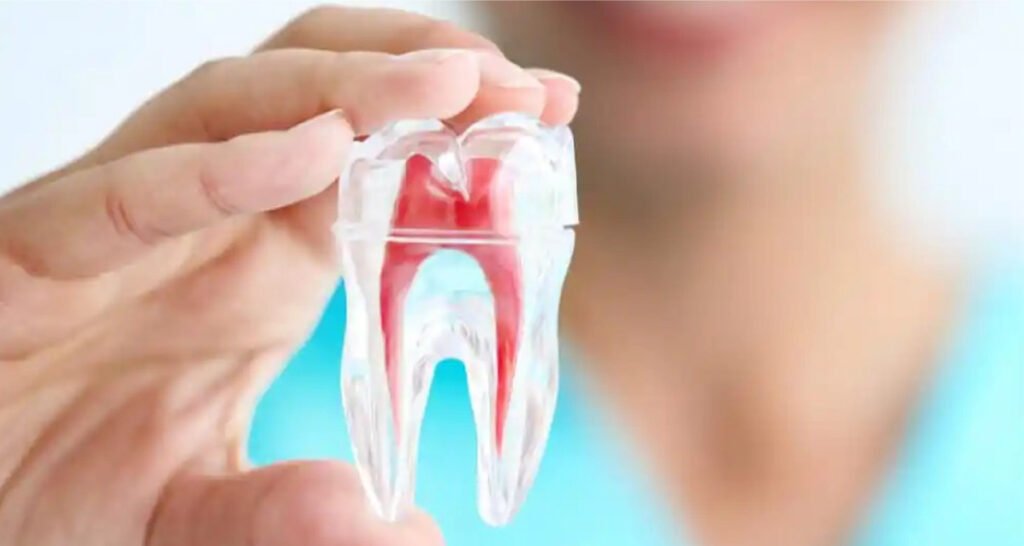
About Root Canal Treatment
Root canal treatment (endodontic treatment) removes inflamed or infected tissue from inside a tooth, cleans and seals the canals, and lets you keep your natural tooth instead of having it removed.
With local anaesthesia it is usually no more uncomfortable than having a filling.
Who is it for?
- Severe or lasting toothache
- Sensitivity to hot or cold that does not go away
- Swelling or a pimple-like bump on the gum
- Deep decay or a cracked tooth
- A tooth that has turned dark
Benefits
- Relieves pain
- Saves your natural tooth
- Stops the infection from spreading
- Restores normal chewing
How the treatment works
- 1
Diagnosis
Examination and X-ray to confirm the tooth needs a root canal.
- 2
Anaesthesia
The area is numbed so you stay comfortable.
- 3
Cleaning the canals
Infected pulp is removed and the canals are cleaned and shaped.
- 4
Filling & sealing
The canals are filled and sealed.
- 5
Crown
In most cases a crown (cap) is advised to protect the tooth.
Care tips
- Avoid chewing hard food on that side until the final filling or crown
- Mild soreness for a few days is normal
- Take medicines only as prescribed
- Contact us if swelling or pain increases
Frequently asked questions
Is root canal treatment painful?
The procedure is done under local anaesthesia. Most patients feel relief from the pain they had before treatment.
How many visits are needed?
It can be one or more visits depending on the tooth and the infection.
Do I need a crown afterwards?
Often yes, especially for back teeth, because a treated tooth can become brittle. We will advise you.
This page gives general information. The right treatment for you can only be decided after an examination at the clinic.